From a Repaired Leyland to a Hydraulic Fleet: What Five Decades Have Taught Nabros About Heavy Haulage


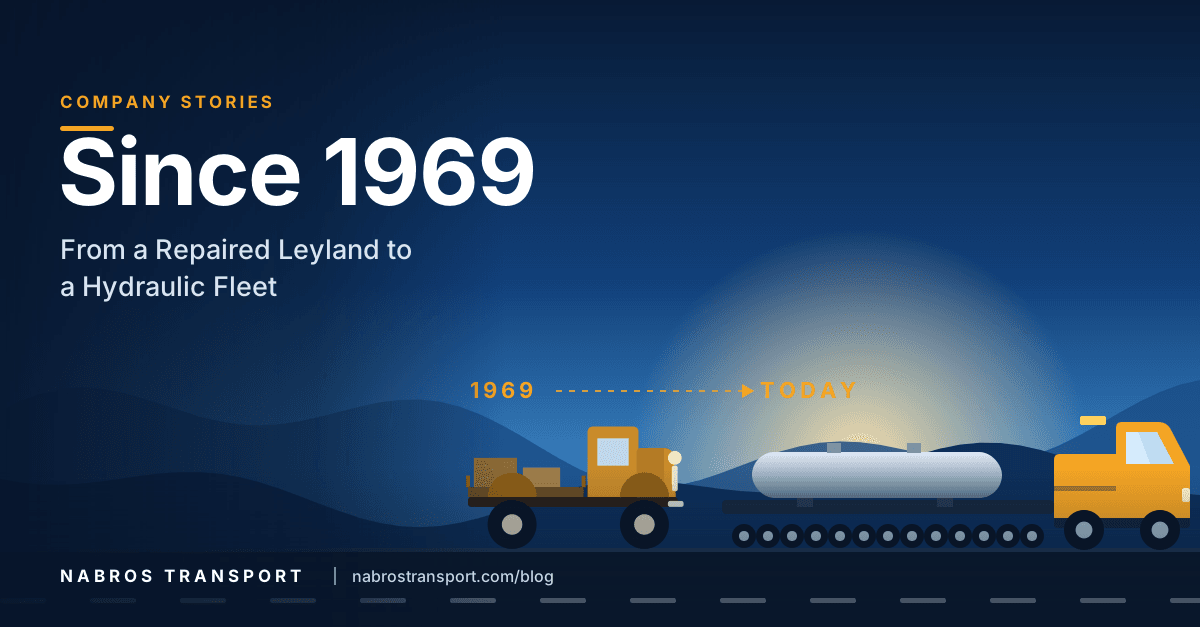
In 1969, in Ahmedabad, two friends took a scrapped Leyland truck and repaired it by hand. That truck, and the decision to put it to work on demanding cargo over narrow and rough Indian roads, is where Nabros begins.
More than five decades later, the company moves reactors, wind turbine components, transformers using hydraulic axle systems, engineered configurations and live tracking. It is easy to tell that story as a story of machines. It is more accurately a story about what changes when equipment improves, and what should never change at all.
The Early Years: Roads, Telephones and Trust
The first decades looked nothing like today’s operations. There was no GPS and no tracking. A driver on a long haul was reached by telephone when a telephone was available, and the route was something to be known rather than looked up. The company relied on road knowledge, personal contact and trust, between drivers and the office, and between Nabros and the customers who handed it difficult cargo.
As the fleet grew, it came to include a Volvo truck imported from Dubai. The common thread through those years was a willingness to take on demanding loads from the start, and a habit of working out, mile by mile, how to move them. Nothing about that habit needed a screen or a satellite. It needed people who knew the road and who could be relied on to turn up and finish the job.
Machinery, Method, Manpower
Nabros describes its operating approach through three words, and each has a clear meaning.
Machinery is the fleet: hydraulic axles, heavy-duty pullers, and specialised equipment. The company operates more than 500 hydraulic axles in its fleet, a depth of equipment that gives planners real choice when a cargo arrives with unusual demands.
Method is the way the work is prepared: route surveys, feasibility studies, safety planning, weather checks, traffic management and contingency support. The best equipment in the world cannot rescue a movement whose route was never properly studied.
Manpower is the people: drivers, engineers, project experts and on-ground teams. Heavy haulage is still a craft, and craft lives in people.
What Technology Has Changed
Equally important is what no tool has replaced.
Judgement. A tracking screen can show that a convoy has stopped. It cannot decide whether to wait for a passing storm or to push on. That call still belongs to experienced people on the ground.
Local knowledge. Roads change: a new junction, a damaged culvert, a market day that fills a village road. Surveys capture the road at one moment, and the people who travel it keep that knowledge current.
Accountability. When something goes wrong at a turn on a hill road, a dashboard does not take responsibility. A named person with the authority to act does.
Trust. Customers hand over cargo that may be irreplaceable and may be worth far more than the truck carrying it. That decision rests on trust built over many deliveries, as it did in 1969.
From Roads to the Energy Transition
The cargo has evolved with the country. Today the portfolio includes reactors, transformers, gas turbines and the components of wind energy projects, along with a growing focus on renewable energy logistics. Clients span energy developers, equipment manufacturers and heavy-engineering firms, and some wind energy clients have worked with Nabros since 1969.
What holds this variety together is a simple idea summed up in the company’s own words: one company with the whole job. Transport, management, technical advice and customs services sit under one roof, so a customer deals with one accountable partner rather than a chain of them.
Growing Responsibly
A company that has worked on India’s roads for so long has an interest in the country beyond the cargo. Nabros runs an employee-led tree-planting initiative across its project and operational sites. To date more than 5,000 trees have been planted, with a target of more than 50,000 over the next two years.
The company also supports a school in Naaz village near Ahmedabad that educates children who are mute, deaf or visually impaired, and provides health and hygiene essentials. These efforts are small beside the scale of the cargo, but they reflect the same instinct as the work itself: take responsibility for what is in front of you.
What the Years Have Taught
If five decades of heavy haulage could be reduced to a short list, it might read like this:
- Prepare more than seems necessary. The move is won or lost in the planning.
- Let the cargo set the plan, not the other way round.
- Invest in equipment, but invest more in people.
- Use technology to see further, and use judgement to decide.
- Stay accountable until the cargo is safely delivered.
None of these ideas came from a manual. Each was learnt on a road, usually with a heavy load behind it.
Looking Ahead
The cargo of the next few decades will include equipment that does not yet exist, and routes that are not yet built. The tools will change again, and so will the questions customers ask. The principles above will not.
If you would like to know more about how Nabros works, or if you have a movement in mind, we would be glad to talk. After all these years, the best conversations still begin with a customer describing a load that does not look easy to move.
Frequently Asked Questions
1. When and where was Nabros founded?
Nabros was founded in 1969 in Ahmedabad, Gujarat, India. The company began when two friends repaired a scrapped Leyland truck by hand and started carrying demanding cargo.
2. What does Nabros do?
Nabros is a specialised project logistics company offering transport, management, technical and customs clearance services. Its capabilities include heavy and specialised transport, wind energy transport, multimodal transport, international freight forwarding, breakbulk chartering, in-house customs clearance, route survey, warehousing, intercarting and renewable energy logistics.
3. What are the "three Ms" of Nabros's approach?
They are Machinery, Method and Manpower: the fleet of hydraulic axles, pullers, and specialised equipment; the preparation through route surveys, feasibility studies, safety planning and contingency support; and the drivers, engineers, project experts and on-ground teams who carry the work out.
4. What equipment does Nabros operate?
The fleet includes hydraulic axles, heavy-duty pullers, and specialised equipment. Nabros reports more than 500 hydraulic axles in its fleet.
5. How does Nabros monitor its movements?
Movements are monitored with Intangles, an AI-based GPS tracking that follows progress, stoppages, overspeeding, harsh driving and vehicle health. Dash cameras support the review of driver behaviour and road conditions.
6. Which industries does Nabros serve?
Nabros serves energy and industrial sectors, including wind and renewable energy, power equipment, heavy engineering, and projects such as defence and monument movements. Its client base includes both developers and equipment manufacturers.
7. Where are Nabros's offices?
The corporate office is in Ahmedabad. Regional offices are in Mumbai and Vadodara, with operational regional offices in Bengaluru, Chennai, Tuticorin, Gandhidham, Pune and Halol.
8. Is Nabros certified?
Nabros states that it is ISO certified and holds certifications and assurance from independent bodies. For current certificates and scope, please contact the team directly.
9. What is Nabros doing for sustainability?
Nabros runs an employee-led tree-planting initiative across its intercarting sites. More than 5,000 trees have been planted to date, with a target of more than 50,000 over the next two years.
10. How can I discuss a project with Nabros?
You can use the contact form on the website, write to ntplamd@nabrostransport.com or call the Ahmedabad corporate office on +91 79 2909 7977 or 7988. Share your cargo details and timeline, and the team will take it from there.
Related Blogs
When There Is No Precedent: What One-Off Cargo Teaches Heavy Logistics
How a 466-Tonne Reactor Takes Four 90-Degree Turns: The Engineering Behind Ultra-Heavy Transport