
Mission Motion Engineering — End Shields, L&T Hazira to NPCIL Rawatbhata


Scope: Heavy & Specialised Transport · Route Survey & Modification · Project Logistics
Client: NPCIL — Nuclear Power Corporation of India Limited
Origin: L&T Hazira, Gujarat
Destination: NPCIL Rawatbhata, Rajasthan
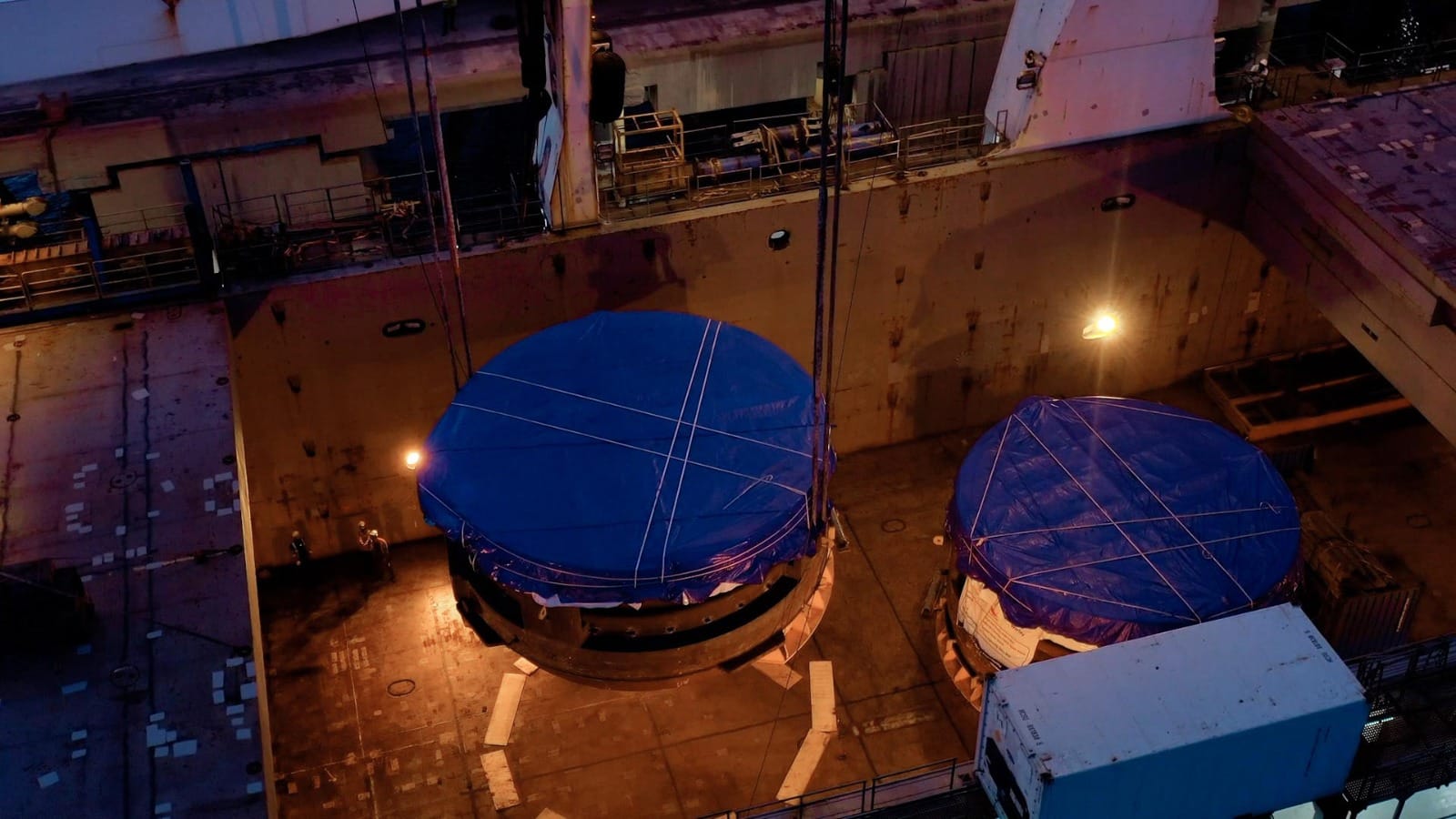
Cargo: Four End Shields
Weight: 116 MT each
Dimensions: 9.48 m × 9.48 m × 1.70 m
Maximum Available Road Width: 5.2 m
The Project
Engineering is at the heart of every Nabros movement. But some assignments demand a level of engineering ingenuity that goes beyond route planning and equipment selection — they require building a solution that has never existed before.
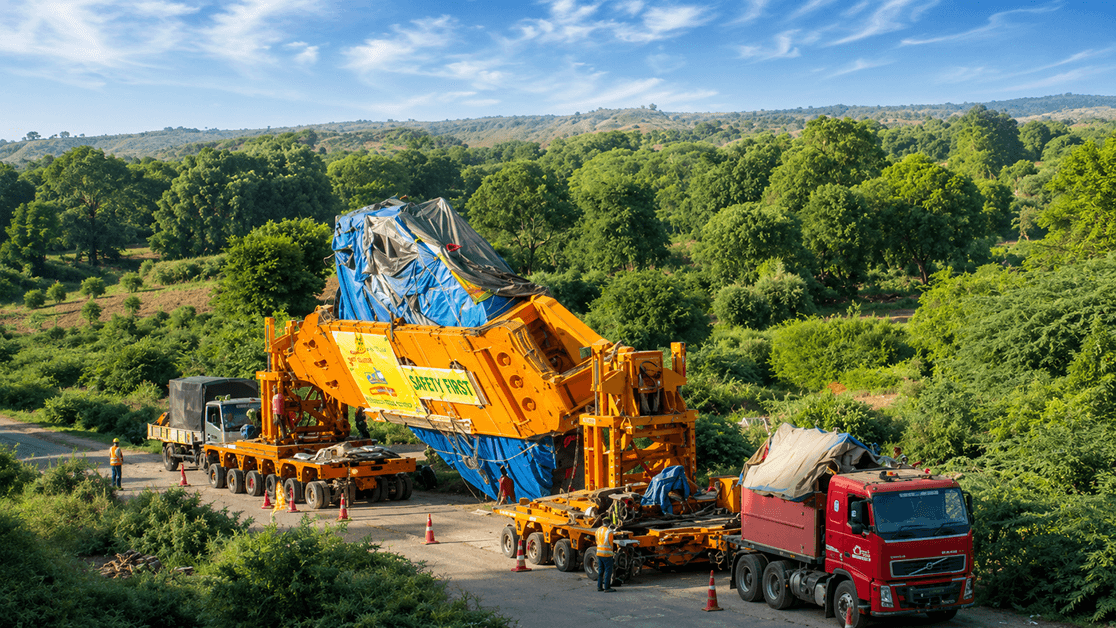
The transportation of four End Shields for NPCIL’s Rawatbhata nuclear power project was one of those assignments. Each End Shield weighed 116 MT and measured 9.48 m × 9.48 m — a near-circular load requiring a road width of more than nine metres to pass in its standard orientation. The maximum available road width across the route was 5.2 m.
The solution could not be found in any existing logistics playbook. It had to be invented.
The Challenge
The fundamental problem was geometric. An End Shield measuring 9.48 m × 9.48 m cannot pass through a corridor of 5.2 m in its standard flat orientation — the numbers simply do not allow it. And yet the cargo had to move. It was destined for one of India’s nuclear power stations, with project timelines and national energy infrastructure depending on its safe arrival.
Beyond the width constraint, the route from L&T Hazira to NPCIL Rawatbhata presented additional obstacles that compounded the challenge — two railway crossings requiring precise navigation, overhead electric cables and electric wires with limited clearance, underpasses along the corridor, and roads that had never been surveyed for cargo of this nature.
With a ground clearance measured in millimetres and a cargo measured in tonnes, every element of the movement required engineering precision of the highest order.
The Execution
Custom Rotating Fixture — Engineering the Solution
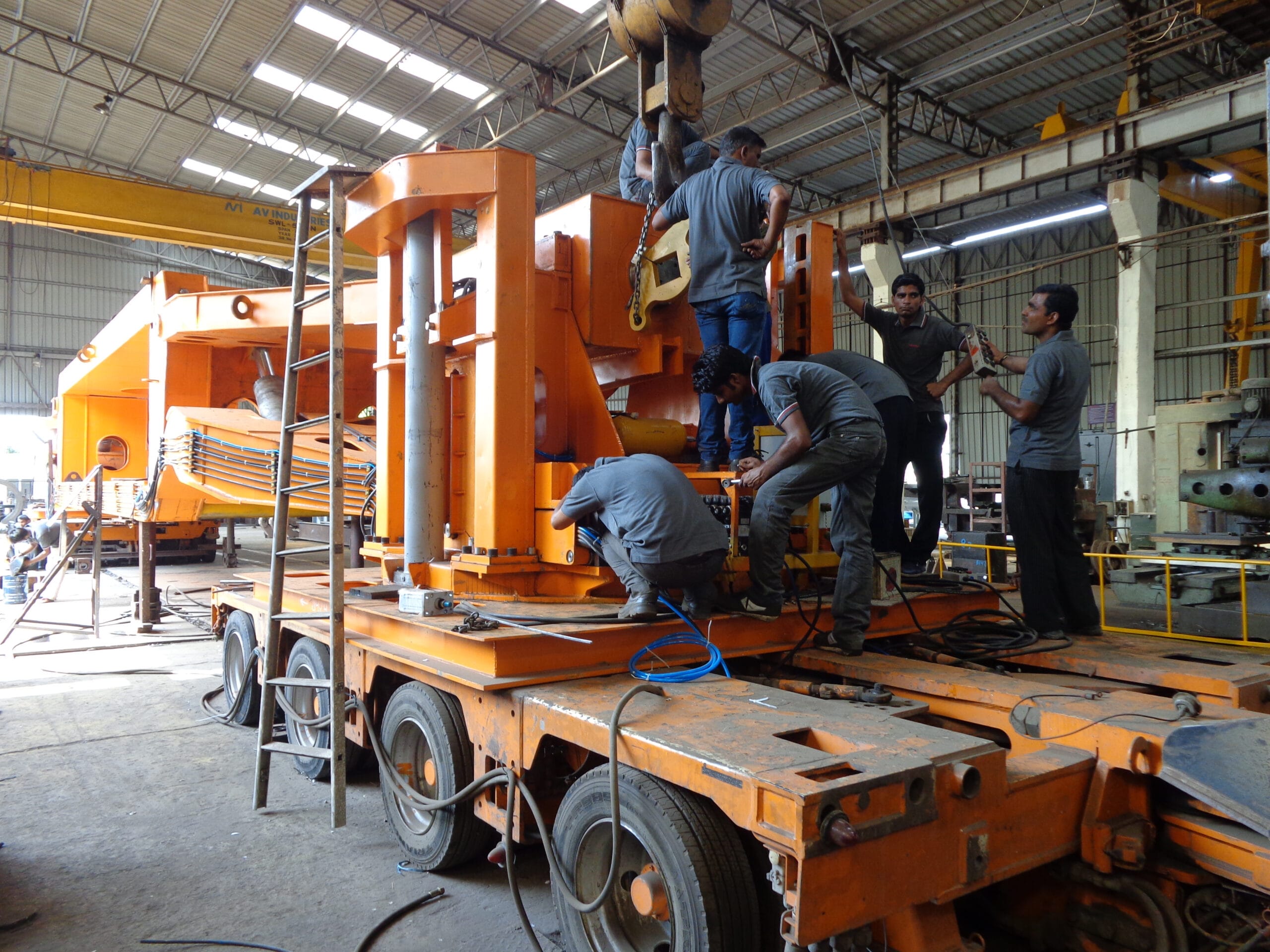
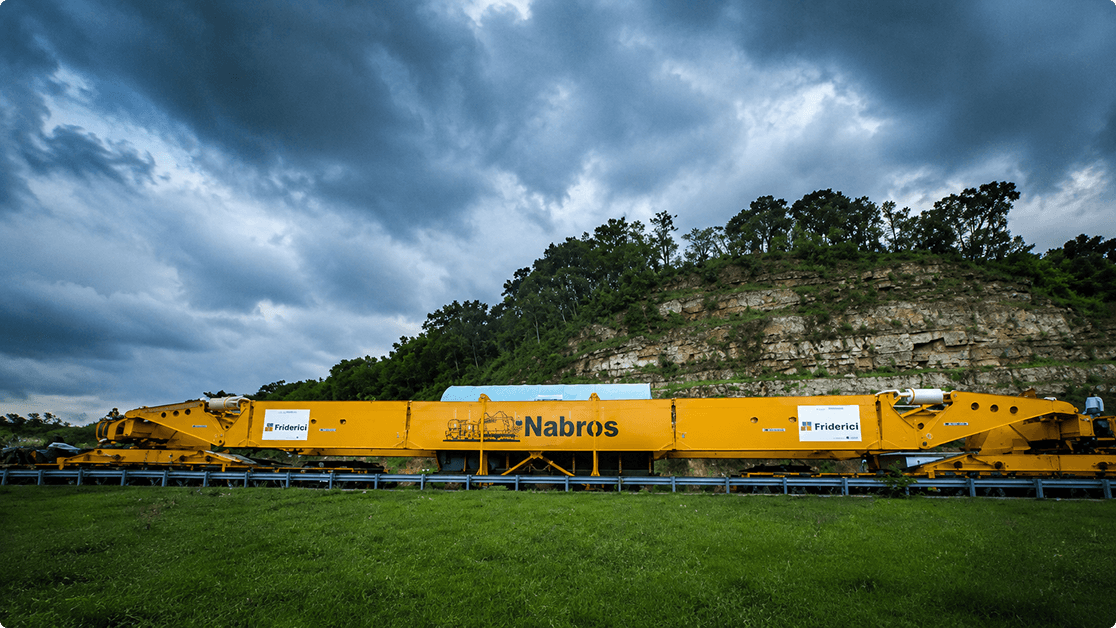
Nabros’ engineering team designed and fabricated a custom rotating fixture specifically for this movement — a solution purpose-built for the unique geometry of the End Shield and the constraints of the route.
The fixture was engineered to rotate the End Shield 180° on its axis while simultaneously rotating 90° at maximum height — effectively changing the orientation of the cargo to reduce its effective width from 9.48 m to a dimension compatible with the 5.2 m road corridor. Throughout this rotation, the fixture maintained a ground clearance of just 72 mm — a margin measured not in centimetres, but in millimetres, requiring absolute precision at every stage of the operation.
The fixture was fully collapsible with a secondary cylinder at normal extended condition — allowing it to be configured and reconfigured as the route demanded.
Railway Crossing Navigation
The route included two railway crossings requiring the loaded convoy to pass safely without disruption to rail operations. The rotating fixture’s design specifically accounted for these crossings — allowing the End Shield to be positioned and oriented to clear railway infrastructure while maintaining the 72 mm ground clearance specification.
Overhead Obstruction Management
Overhead electric cables, electric wires, and underpasses along the route were managed through a combination of pre-planned convoy routing, coordination with state electricity boards for temporary de-energisation where required, and precise height management using the rotating fixture’s configuration capability.
Four Movements, One Standard
The operation was executed four times — once for each End Shield. Each movement maintained the same engineering standard, the same safety protocols, and the same precision as the first. Consistency across four complex movements on a technically demanding corridor is a measure of operational discipline that goes beyond any single delivery.
The Outcome
All four End Shields were delivered safely to NPCIL Rawatbhata — 116 MT nuclear power components, moved through a 5.2 m corridor using a custom-engineered rotating fixture that solved a geometric problem no standard logistics approach could address. The movement stands as one of the most technically sophisticated heavy transport operations ever executed in India.
When the physics say it cannot be done, Nabros engineers a way.
Tags: Heavy & Specialised Transport · Route Survey & Modification · Project Logistics

Related Case Studies
40-Ton Transformer — Hyderabad to Doncaster, U.K.
Engineering the Turn — 466.26 MT Reactor, BHEL Haridwar to NRPC Gadarwara