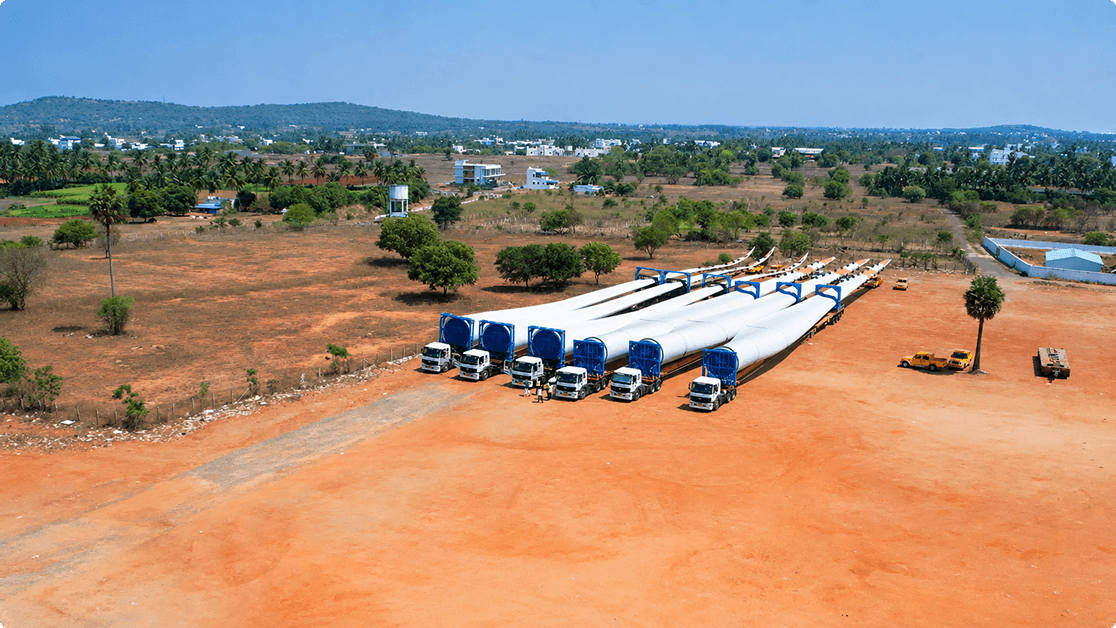
India’s Longest Blade — 90.2 m from Thoothukudi to Koppal


Scope: Wind Energy Transport · Heavy & Specialised Transport · Route Survey & Modification · Project Logistics
Origin: Thoothukudi, Tamil Nadu
Destination: Koppal, Karnataka
Blade Length: 90.2 metres
The Project
Moving a wind turbine blade measuring 90.2 metres across Indian roads is not a logistics challenge — it is an engineering problem that happens to involve a vehicle. When Nabros was assigned the transportation of what stands among India’s longest wind turbine blades ever moved on road, the team understood from the outset that conventional approaches would not suffice.
This was a movement that had to be designed before it could be executed.
The Challenge
At 90.2 metres, the blade presented physical constraints that tested every aspect of Nabros’ route engineering and operational capability.
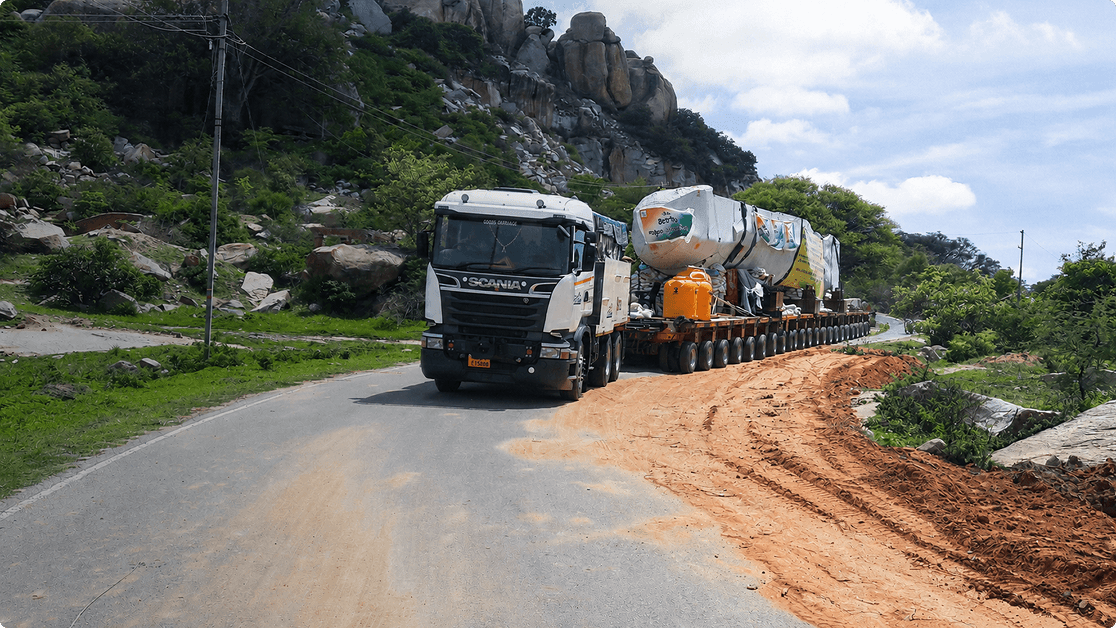
The route from Thoothukudi in Tamil Nadu to Koppal in Karnataka required traversing the ghat sections of Dharmapuri, Namakkal, and Salem — terrain characterised by steep elevation changes, tight turning radii, and restricted road corridors that leave little margin for a load of this length. These sections, challenging for ordinary vehicles, become a precision exercise when the cargo extends nearly the length of a football field.
Beyond the ghats, the route presented a series of additional constraints — overhead utilities, narrow bridges, road geometry that had not been surveyed for a blade of this dimension, and the coordination requirements of moving an oversized load through populated areas with minimal disruption.
The Execution
Route Feasibility & Engineering
Before a single trailer was mobilised, Nabros conducted a detailed route feasibility study across the entire corridor. Every kilometre was assessed for width restrictions, turning geometry, overhead clearances, bridge load ratings, and surface conditions. Where the route presented obstacles, solutions were engineered in advance — whether through temporary infrastructure, modified swept paths, or coordination with local authorities for partial road closures.
Equipment Selection & Configuration
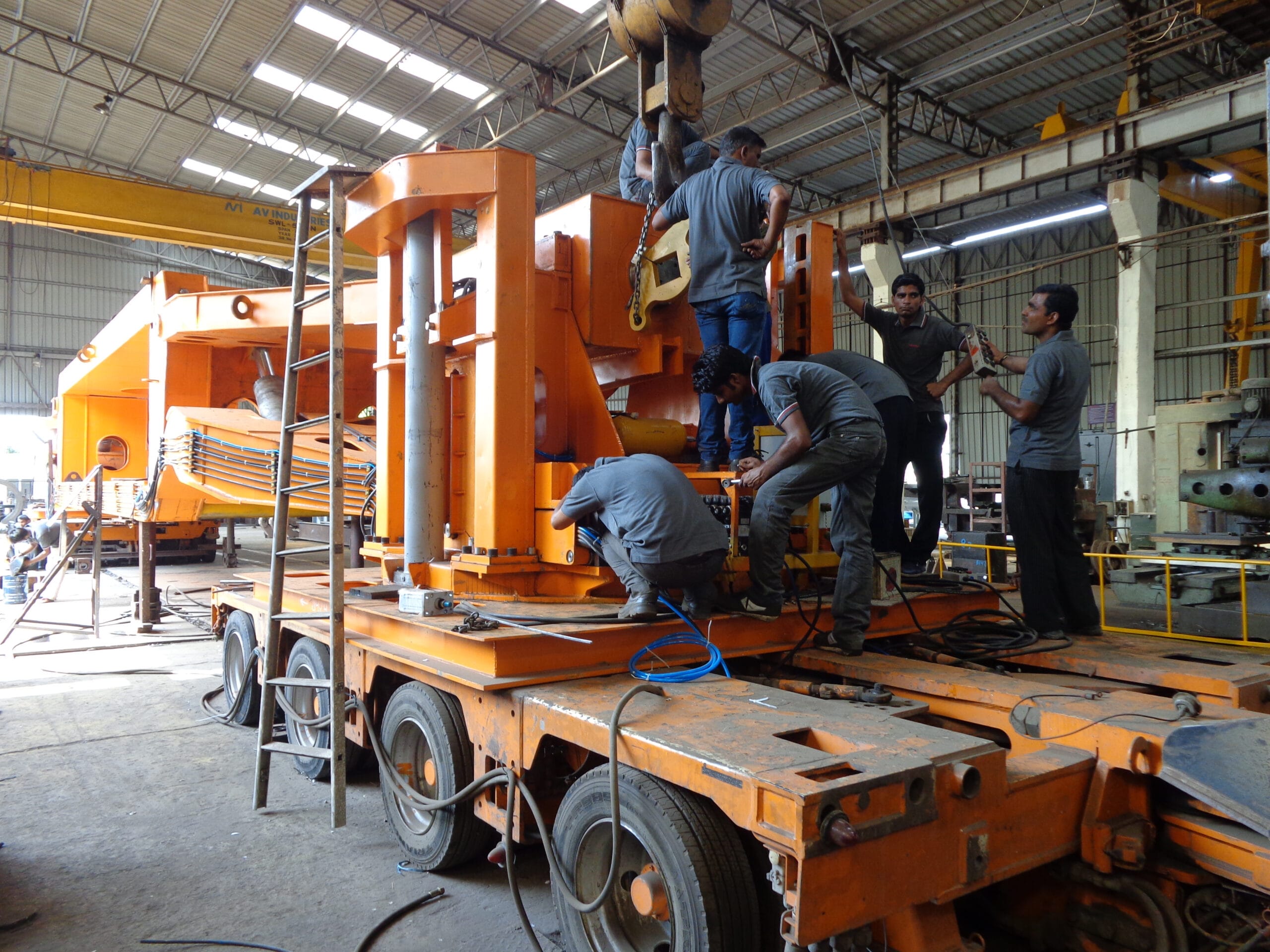
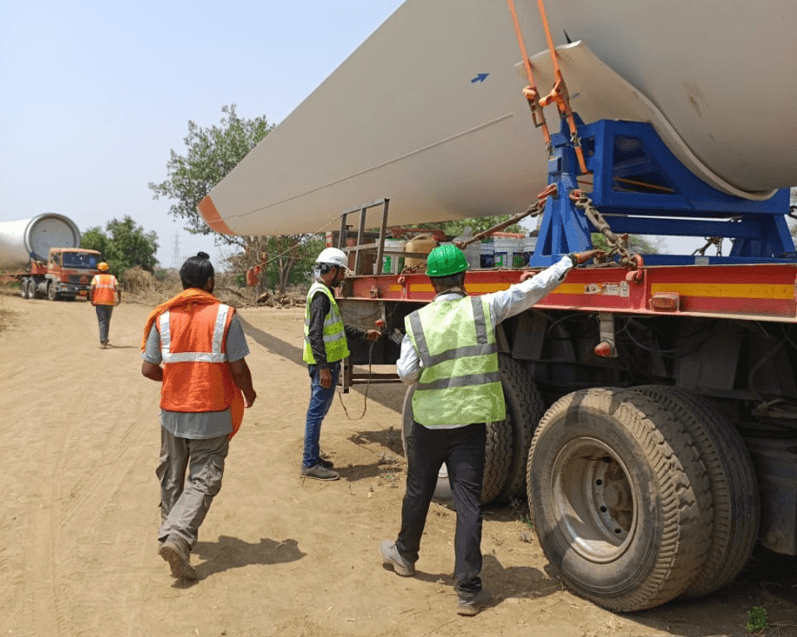
The 90.2-metre blade required a specialised blade trailer configuration capable of managing the load’s length, weight distribution, and the turning requirements of the ghat sections. Equipment was selected and rigged specifically for this movement — not a standard deployment, but a purpose-configured solution for this specific blade and this specific route.
Ghat Section Navigation
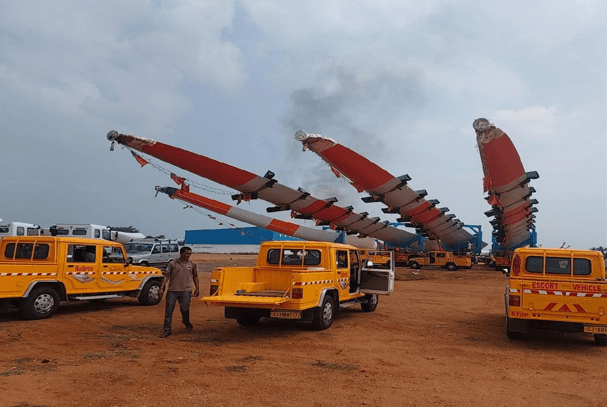
The Dharmapuri, Namakkal, and Salem ghat sections represented the most technically demanding portions of the route. Steep gradients, hairpin bends, and restricted road widths required slow, precise convoy management with experienced operators and dedicated escort vehicles at every position. Each turn through the ghats was executed with the kind of precision that comes only from careful pre-planning and experienced on-ground teams.
On-Ground Coordination
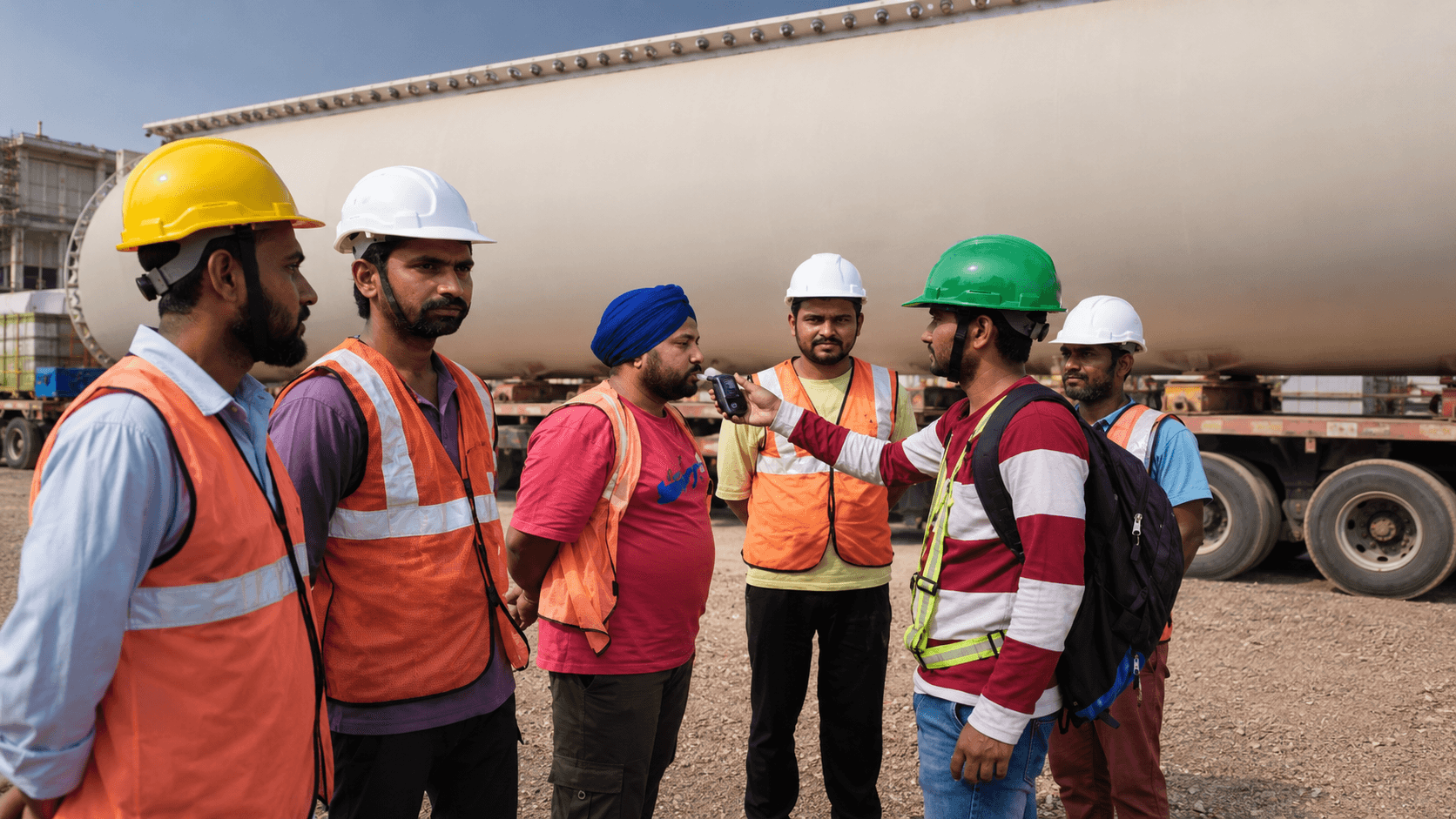
Throughout the movement, Nabros’ field teams maintained continuous coordination — managing traffic, liaising with local authorities, and monitoring road conditions in real time. The convoy moved with a full escort deployment, ensuring safety for the cargo, the team, and other road users throughout the journey.
The Outcome
The 90.2-metre blade reached Koppal safely and on schedule — one of the longest wind turbine blade movements executed on Indian roads. The project demonstrated that with the right engineering approach, the right equipment, and the right team, India’s most demanding road corridors are not barriers to wind energy development. They are problems Nabros is built to solve.
Related Case Studies
40-Ton Transformer — Hyderabad to Doncaster, U.K.
Engineering the Turn — 466.26 MT Reactor, BHEL Haridwar to NRPC Gadarwara